
How To Build a Chain Ep. 2: Why Build on Top of Ethereum?


Building a blockchain involves dozens of moving parts, complex trade-offs, and a lot of behind-the-scenes work.
With Vision Chain, we want to bring you along on that journey and pull back the curtain on what building and launching a blockchain actually takes: what goes on under the hood, why certain architectural choices are made, which milestones are standard, and why some steps naturally take longer than others.
That is the goal of "How to build a chain" - a short educational video series answering one fundamental question per episode, in plain language without the jargon. Hosted by Vicktoria Klich, Ecosystem Lead Web3 at Bitpanda, the series breaks down the process step by step.
Vision Chain is an Ethereum Layer 2 blockchain built by the VISION web3 Foundation in collaboration with Bitpanda and Optimism, designed for European finance.
Episode 2 is already live on X - recorded in German, with English subtitles. You can watch the video below or read through the key takeaways right here: https://x.com/vsntoken/status/2123420361203081411
Why build on top of Ethereum?
Ethereum is one of the most widely used blockchains in the world. So if it already exists, why would anyone build a new chain on top of it instead of simply using Ethereum directly?
Episode 1 covered why you would build a chain at all. Episode 2 is about the foundation - and about a term many people nod along to without really knowing what it means: Layer 2.
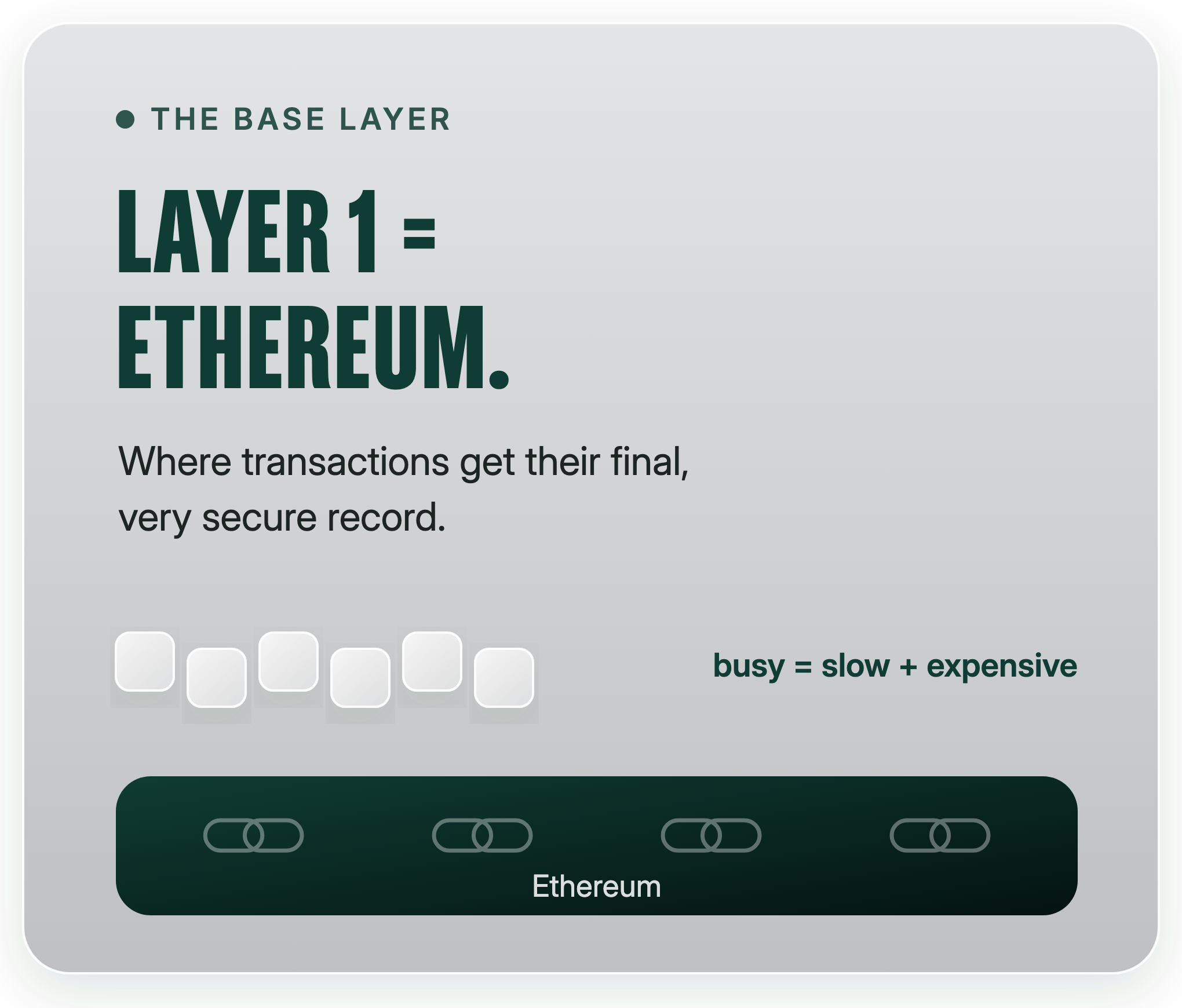
Layer 1: the base layer
Ethereum is the base layer, also known as Layer 1. It is where transactions get their final, very secure record.
The trade-off is space. When lots of people want to use Ethereum at the same time, they all compete for the same limited room - and transactions get slow and expensive.
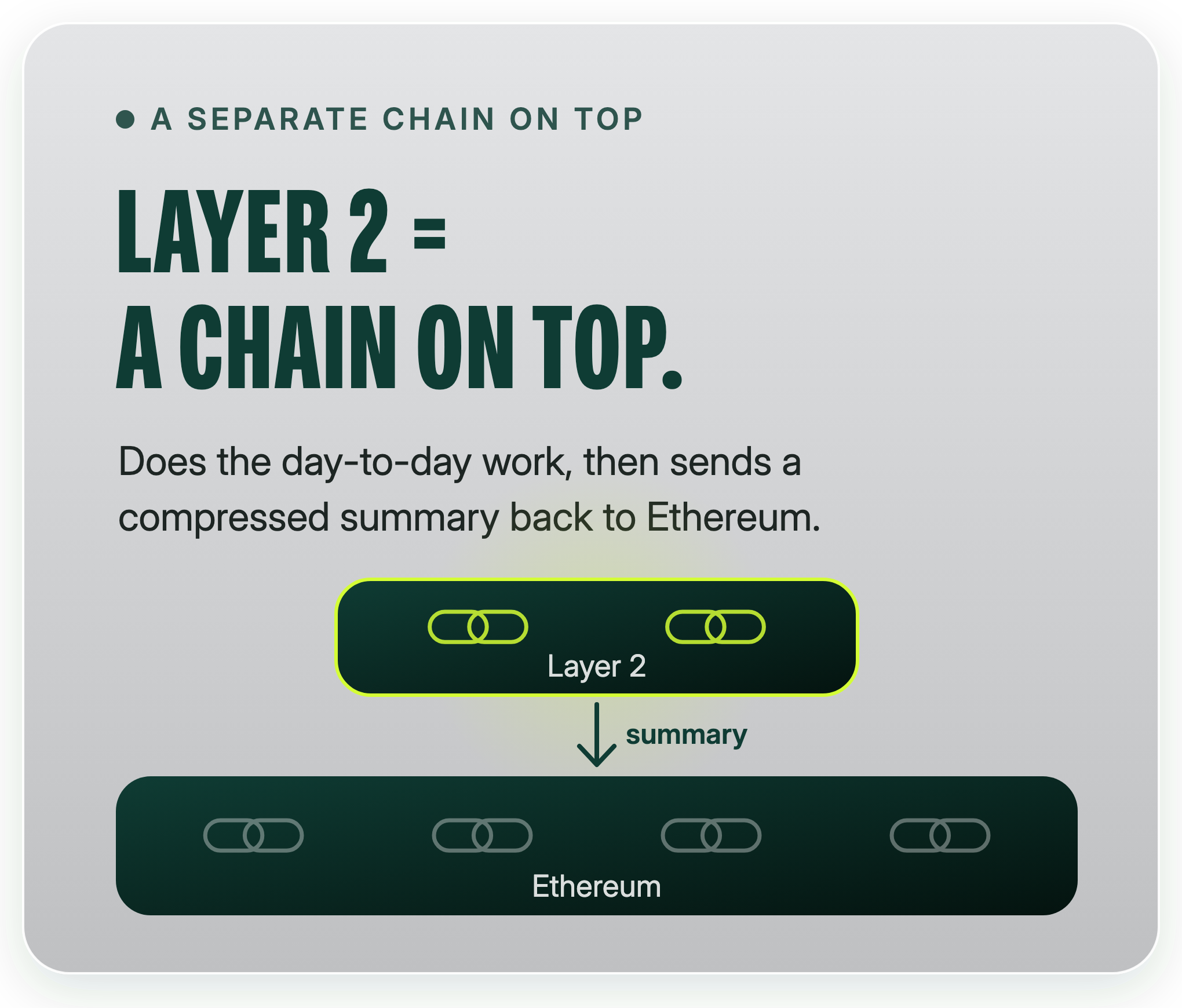
Layer 2: a separate chain on top
A Layer 2 is a separate chain that runs on top of Ethereum. It takes on the day-to-day work: it processes transactions itself and regularly sends a compressed summary back to Ethereum.
The result: the activity happens on the Layer 2, while Ethereum remains the final record that keeps everyone honest.
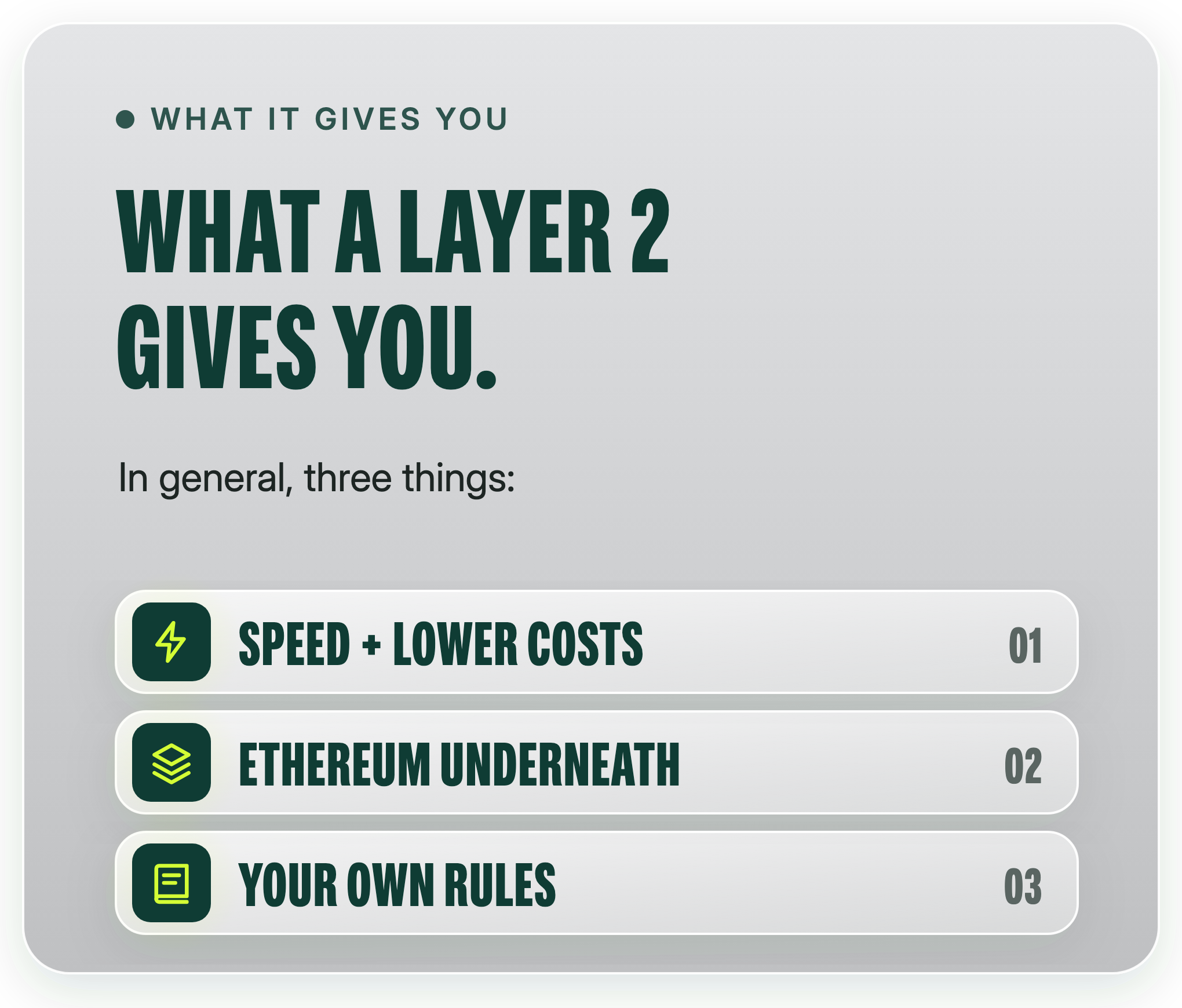
What a Layer 2 gives you
In general, building as a Layer 2 comes down to three core benefits:
- Speed and lower costs. Transactions are processed on the Layer 2, so they don't each have to compete for space on Ethereum.
- Ethereum underneath. The final, secure record still lives on Ethereum.
- Your own rules. A Layer 2 can be designed around what its users and partners need - your chain, your framework.
That last point is exactly why companies and institutions find Layer 2s so interesting.
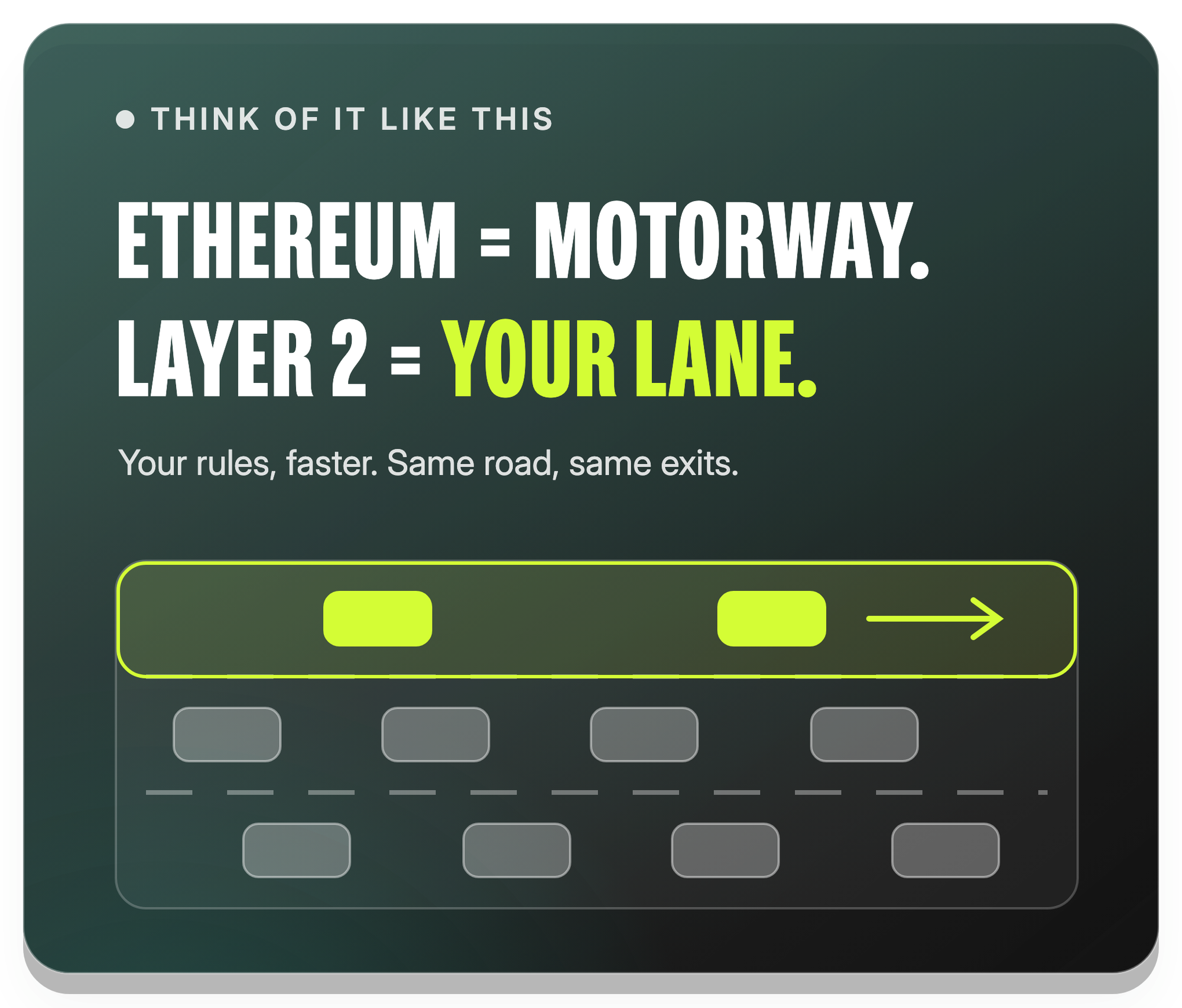
Think of it like a motorway
Picture Ethereum as a big motorway. A Layer 2 is your own lane on that motorway.
In your lane, you set the rules and move faster - but you are still on the same road, with the same foundations and the same exits.
How We Approach This with Vision Chain
Vision Chain doesn't replace Ethereum either: it is a Layer 2 that builds on Ethereum, not a new, separate Layer 1. It is designed compliance-first, with regulated institutions in mind. The points above describe Layer 2s in general, not speed or cost figures for Vision Chain.
The takeaway
A Layer 2 doesn't replace Ethereum - it builds on it.
Coming up in Episode 3
The building blocks: You don't need to build a chain from scratch. So what do you actually build it with?
Disclaimer
This crypto-asset marketing communication has not been reviewed or approved by any competent authority in any Member State of the European Union. The issuer and the offeror of the crypto-asset are responsible for the content of this crypto-asset marketing communication. Crypto-assets are volatile and carry a risk of total loss.
Vision Chain is an Ethereum Layer 2 rollup blockchain built using the Optimism OP Stack. The Vision Chain and the Vision Token (VSN) are issued by the Vision Web3 Foundation which is an independent and unregulated Swiss Foundation. Use of the Vision Chain may be subject to your local laws and regulations. Not an offer or solicitation to acquire VSN.
For full details on VSN, see the official white paper under: https://www.bitpanda.com/en/legal/vsn-white-paper